-
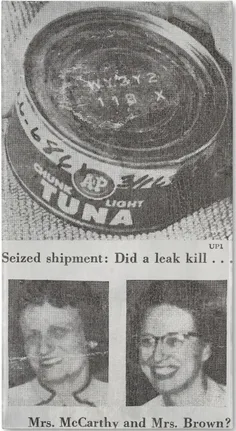
Skarstedt is pleased to announce Dark Comedy , an exhibition which traces a strand of caustic humor running throughout the post-war period. Particularly in the United States, as the cracks began to show in the Reagan era’s utopian cultural narrative surrounding the nuclear family and American suburbia, many artists turned to comedy to reveal the darker undercurrents beneath this carefully constructed façade. From this perspective, Andy Warhol’s Tunafish Disaster (1963) serves as an important, early precedent for several of the artists in the exhibition. In this work, the morbid headline creates an absurd disjunction with the smiling housewives and the comically enlarged tuna can. Playing on society’s obsession with death and disaster, Warhol suggests a lurking danger in the fantasy-world of post-war American suburbia. Bruce Nauman and Mike Kelley likewise partake in a resignification of familiar cultural or domestic icons: Nauman’s neon sign –– deeply nostalgic from small-town storefronts and diner windows –– lures the viewer into its warm glow, which is, upon closer viewing, transformed into an eerie space of isolation through Nauman’s anagrammatic wordplay in the same way that Kelley’s stuffed animals lose their aura of innocence as they are recast in a ritualistic scene on the gallery floor. Perhaps most hauntingly, Robert Gober’s gleaming, yet hopelessly non-functional, basin morphs into a tombstone in a sinister update to Marcel Duchamp’s Fountain (1917) in the wake of the AIDS crisis of the 1980s and ‘90s. In David Salle’s Noose Soon (1996), the noose begins to tighten around a faltering myth of American cultural life and its vision of domestic contentment. While artists such as Gober and Salle reclaim humor as a critical tool to reflect on certain social crises, comedy often functions within society as an exclusionary force. When Cindy Sherman and Rosemarie Trockel invoke comic performers such as the clown and the mime, they point to the complex rituals which society has designed to ridicule otherness; as Trockel titles her collage, Divided We Laugh . This derisive, mocking laughter resounds in Richard Prince’s My First Girl (1989), whose appropriated one-liner articulates a certain depravity at the heart of American culture, as the quintessential American girl (Sally) becomes the target of the mob’s crude humor. Popular comedy is often a sublimation of more sinister drives and desires in this way, as is clear in Jeff Koons’ Fait d’hiver (1988), which restages an absurd, eroticized encounter from a magazine advertisement. Koons alerts us to the darker libidinal economy that structures popular culture from below. Juan Muñoz’s hanging (or hanged) figure, which recasts Edgar Degas’ iconic circus performer in a theater of cruelty, similarly implicates the viewer in an unsettling drama, targeting the viewer’s intrinsic fascination with violence, just as Martin Kippenberger’s crucified frog –– nailed to a set of stretcher-bars –– makes light of the artist’s own bitter persecution at the hands of a society that is always eager to ridicule its non-conformist members. Throughout the exhibition, comedy erupts from an uncomfortable proximity between high and low, sacred and profane, pleasure and pain, purity and impurity. However, comedy’s status remains rather unclear, since it on the one hand a mechanism which risks reinforcing these same cultural hierarchies; yet comedy also retains a radical potential, as it can provoke momentary crises in established codes of meaning, challenging deep-rooted systems of cultural worth, whether social, political, religious, or aesthetic.
Click here to add bronder.nyc as your preferred source for shows on Google Search.
Skarstedt – New York, Upper East Side
All exhibitions at Skarstedt – New York, Upper East Side · Map view
Your itinerary
Nothing saved yet. Choose + beside a showtime to start building a night out.
Back to the listKnow a place we’re missing?
Help this guide find its next small stage, jazz room, or gallery. Send a venue you’d like to see here.